
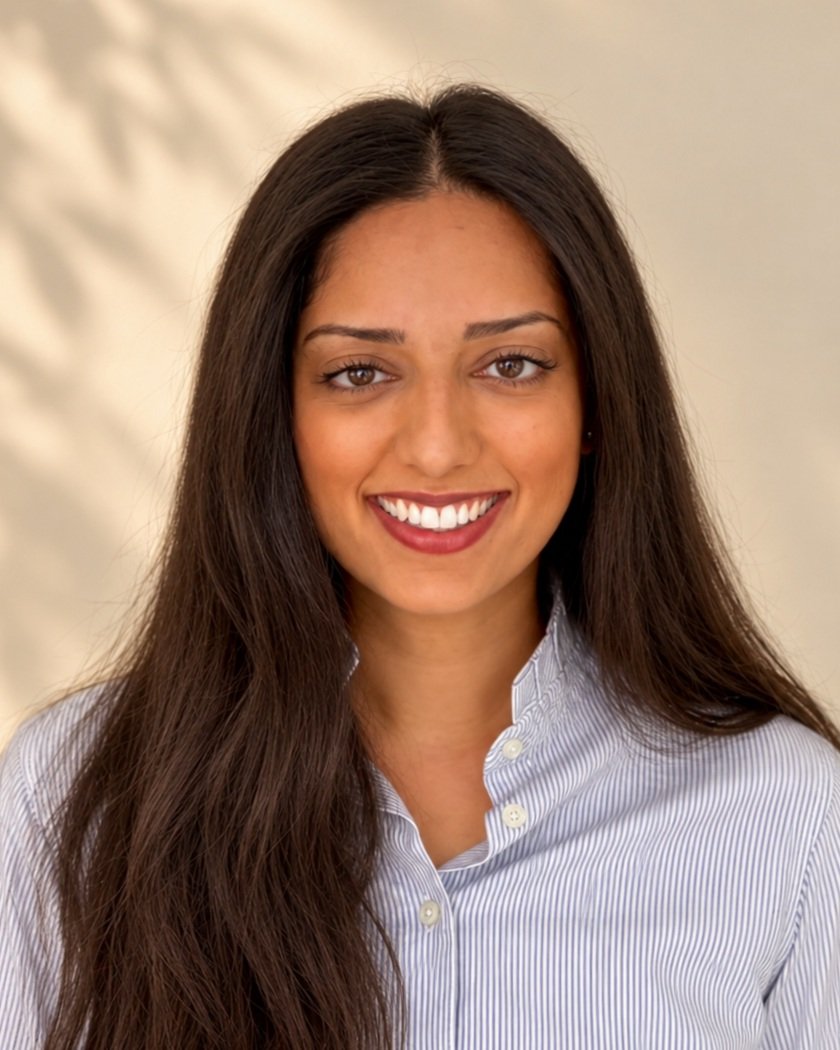
Sahar Meher, PsyD
Postdoctoral Psychotherapist, NY
ADHD
Autism
Anxiety
Trauma
Couples
Neuropsychological Assessment
SEES PATIENTS: In person · Online
English
Dari
Sahar is a doctoral-level psychotherapist who believes insight is most valuable when it changes how life feels outside the therapy room. She earned her Doctor of Psychology (PsyD) in Clinical Psychology from The Wright Institute, where her practice-intensive training emphasized understanding and treating the whole person — not simply a collection of symptoms.
She works with adults and young adults who may appear capable on the outside but privately feel overwhelmed, disconnected, or caught in patterns they do not fully understand. Her patients often come to therapy struggling with anxiety, depression, trauma-related concerns, relationship difficulties, emotional intensity, identity questions, or major life transitions.
Sahar brings warmth, curiosity, and depth to her work. She helps patients understand how their histories, relationships, identities, and cultural environments have shaped them — while also developing practical ways to create change in the present.
Therapeutic Approach and Modalities
Sahar's approach is depth-oriented, relational, and psychodynamic. She understands therapy as a space for deeper self-understanding, meaningful change, and genuine connection. Her style is warm and collaborative, with close attention to the emotional and relational patterns that shape how patients experience themselves and others.
She approaches each patient with curiosity and nuance, considering how culture, family history, identity, and systemic forces influence emotional life, relationships, and one's sense of self. Rather than relying on a fixed formula, she adapts the work to the individual — and may incorporate DBT-informed strategies when practical support with emotional regulation, distress tolerance, or communication would be helpful.
Unique to her work: Sahar views each therapeutic relationship as a unique creation between patient and therapist. She attends to what unfolds in real time — including patterns that emerge within the therapeutic relationship itself — to help patients develop greater insight and discover new ways of relating to themselves and others. In her work with couples, she brings this same attention to the patterns unfolding between partners, helping them understand one another more deeply and develop new ways of connecting.
Psychodynamic-relational
Attachment-based
DBT-informed
Trauma-informed
Culturally responsive
Neurodiversity-affirming
Specialties and Areas of Focus
PopulationsYoung adults · Adults · Neurodivergent individuals · Immigrants and first-generation individuals · Third-culture individuals · LGBTQIA+ individuals · Creatives · CouplesClinical AreasAnxiety · Depression · Trauma-related concerns · Relationship and interpersonal difficulties · Emotional regulation · Identity and belonging · Self-esteem · Life transitionsSpecial InterestsLate-identified ADHD and Autism · Couples therapy · Cross-cultural identity and belonging · Attachment and relationship patterns · Discrepancy between external functioning and emotional well-being
Training and Credentials
Degrees & InstitutionsPsyD, Clinical Psychology — The Wright InstituteCertifications & Specialized TrainingPsychodynamic psychotherapy · DBT-informed group therapy · Attachment, Regulation, and Competency (ARC) trauma treatment · Integrated behavioral health · ADHD evaluation · Crisis assessment and intervention
Relevant Past Experience & PublicationsCollege counseling · Integrated primary care · Community mental health · Outpatient psychodynamic psychotherapy · Individual and couples therapy
Personal Note
Navigating both Middle Eastern and American cultures, as well as life on both coasts, has shaped how I understand identity and belonging. Experiences with neurodivergence in my family have also deepened my appreciation for the varied ways people think, communicate, and move through the world.I bring these perspectives into my clinical work, creating space for patients to explore the full complexity of who they are without needing to simplify or explain themselves. To me, therapy is a unique relationship created together — a space where, through being deeply received and understood by another mind, people can become more fully themselves.
Work with Sahar. Free 20-minute call